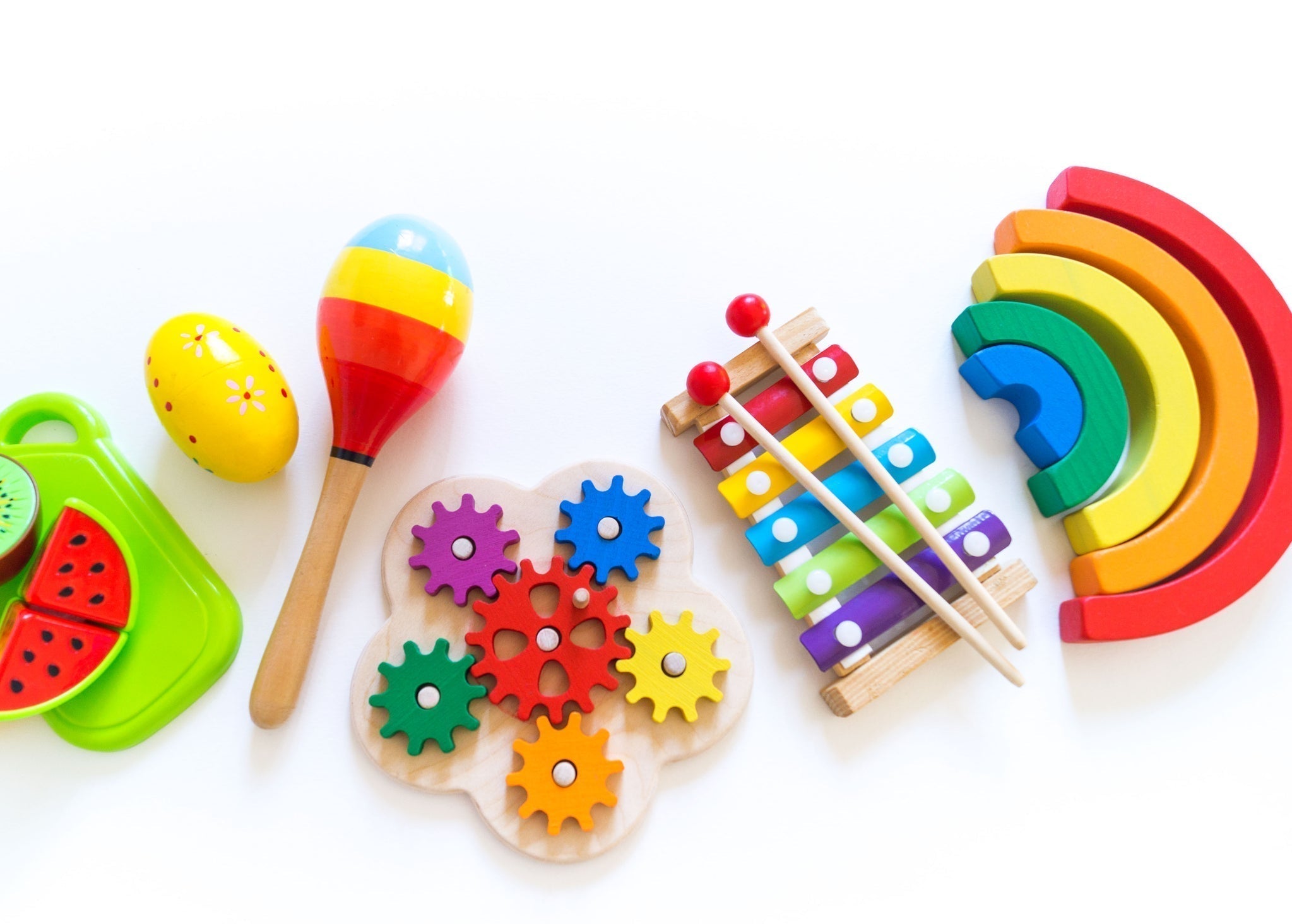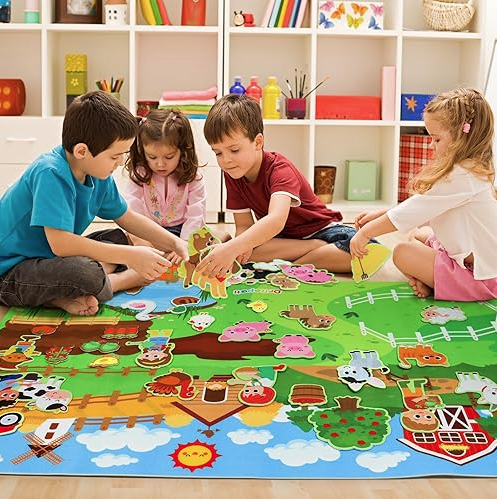


Quick picks by goal:
- Sensory regulation: textured “rough/smooth” boards, sound cylinders, weighted plush, slow-flow sensory bottles.
- Language: real-object baskets, object↔picture matching, first sequencing cards, sandpaper letters (later).
- Executive function/attention: magnetic maze, simple pattern blocks, latches/locks board with 1–2 mechanisms.
- Emotional regulation: calm nook basket (breath card, soft timer, squish ball), grace-and-courtesy scripts.
- Motor: coin-box posting, scoop/transfer tray, lacing cards, mini geoboard, balance board (with supervision).
What does “inclusive Montessori” look like in real life?
Short answer: It’s the same prepared environment—child-height shelves, real materials, and clear order—adapted to the child’s sensory profile and communication style. Tools are chosen for purpose (one goal), not buzz, and success is built into the design so your child can work independently and proudly.
Why this matters for special needs: many neurodivergent children thrive when the world is predictable and uncluttered. Montessori materials are deliberately simple, tactile, and sequenced; they invite repetition rather than demanding it. A coin-box posting tray, for example, limits moving parts, signals the goal visually, and “clicks” when a coin drops (a built-in reward). These features reduce cognitive load and increase on-task engagement without external prompts.
To individualize, modify variables, not the core idea: larger pieces for hand strength; fewer pieces to reduce overwhelm; textured handles for proprioception; a small rug to define boundaries. Adjust one variable at a time and observe for two to three days before swapping.
Sources (section): American Montessori Society on neurodivergent learners amshq.org; Association Montessori Internationale resource library montessori-ami.org; CDC child development overview cdc.gov.

How do I choose toys by need (not only by age)?
Direct answer: Watch what your child repeats—seeking deep pressure, lining objects, mouthing, tapping, or tracing. Then choose one tray that safely mirrors the behavior while growing a related skill. Keep two “anchors” (beloved, regulating) and rotate one new challenge weekly.
Use the “5 Domains × Montessori Fit” map:
| Domain | Observe | Offer | Scale up |
|---|---|---|---|
| Sensory regulation | Seeks pressure/rocking; covers ears | Weighted plush, balance board with spotter, sound cylinders | Grading activities (louder→softer; heavy→light) |
| Language/communication | Brings objects to label; points | Real-object basket; object↔picture matching; “I-Spy” sounds | Three-part cards; sandpaper letters |
| Executive function | Short focus; impulsive grabbing | Magnetic maze; single-step sequence cards | Two-step sequences; pattern blocks with guides |
| Emotional regulation | Jitters before table work | Calm nook: breath card, sand timer, soft “squeeze” tool | Self-check scripts; child logs “what helped” |
| Motor development | Drops tiny parts; avoids two-hand tasks | Posting box (large tokens); scoop & transfer tray | Lacing; geoboard; tweezers transfer |
Evidence note: play setups that minimize extraneous stimulation can support longer attention spans in preschoolers; simple, goal-directed tasks scaffold self-regulation and planning—skills frequently targeted in autism and ADHD supports.
Sources (section): CDC milestones & parent strategies cdc.gov; Harvard Center on the Developing Child (executive function) developingchild.harvard.edu; AMS statement on neurodivergent learners amshq.org.
Which Montessori-aligned sensory regulation tools help without overstimulation?
Direct answer: Choose slow, deep, and predictable inputs. Weighted plush (short sessions), balance boards with a spotter, texture grading (rough↔smooth), sound cylinders (soft↔loud), and DIY sensory bottles promote regulation more reliably than flashing electronics.
How to present: place one tool per tray with a clear sequence (e.g., “heaviest → lightest” or “quiet → loud”). For heavy work seekers, add safe resistance (putty pulls, carry books to a basket). For auditory sensitivity, start with very soft paired sounds and a gesture for “all done.” Keep sessions brief at first (2–3 minutes), then lengthen as tolerance grows.
Evidence snapshot: occupational therapy literature supports “proprioceptive/heavy work” and predictable vestibular input for some children with sensory processing differences; clinical guidance recommends individualizing dose and monitoring arousal (aiming for calm focus, not drowsiness). Weighted items are typically used in short, supervised intervals as part of a broader plan.
Sources (section): NIH/NICHD early learning overview nichd.nih.gov; AAP toy safety & selection healthychildren.org; Montessori sensory materials primers (AMI) montessori-ami.org; general information on sensory tools for autism mentalhealthcenterkids.com.

How can toys support language & communication (speech delay, AAC-friendly)?
Direct answer: Start with real objects in context. Build a small basket tied to a routine (cup, brush, sock). Name items during the routine, not as a quiz. Next add object↔picture matching, then simple classification (animals vs. vehicles). Keep images realistic, not cartoonified.
Montessori alignment: materials isolate one concept (match exact to exact; then match object to photo). Use clean photos on plain backgrounds; keep sets to 4–6 pairs. For older preschoolers, invite “I-Spy” initial sounds with 3–4 familiar objects. If your child uses AAC, place the device within reach and model the same core words you are speaking (“open,” “in,” “more”).
Evidence snapshot: caregiver-implemented language strategies—labeling during routines, following the child’s focus, and expanding utterances—are linked with vocabulary growth in toddlers; low-distraction visual supports (real photos, clear categories) increase success for many autistic learners.
Sources (section): CDC communication milestones & strategies cdc.gov; AMI/AMS guidance on language areas amshq.org; parent-friendly overview of object/picture supports in autism education autismspeaks.org.
Which activities build executive function & attention for ADHD profiles?
Direct answer: Choose tasks with a visible end and minimal steps: magnetic mazes, single-mechanism latches, pattern blocks with a simple guide, and 3–4 card sequences (wash hands → dry → put towel in basket). Use a soft sand timer (3–5 minutes) as a visual cue, not a countdown threat.
Montessori alignment: the material itself holds attention (no constant adult prompts). A maze requires planning and error-checking; a latch requires step order; pattern blocks require matching and flexibility when a shape “doesn’t fit.” Offer two choices at a time, both success-possible; alternate seated focus with movement breaks (carry a book to the shelf, wall push-offs, march to a song).
Evidence snapshot: executive functions (working memory, inhibitory control, cognitive flexibility) are trainable in early childhood through structured play; brief, repeated practice with increasing challenge tends to beat long, sporadic sessions.
Sources (section): Harvard Center on the Developing Child—executive function & games developingchild.harvard.edu; CDC ADHD basics for parents cdc.gov.
How do we scaffold emotional regulation without shaming?
Direct answer: Create a predictable “calm nook” and rehearse it during calm times. Stock one basket: soft timer, picture “breath card,” squish ball, and a choice board (“rock,” “wrap,” “read”). When dysregulation starts, guide to the nook with few words and a co-regulated breath; when the body is calmer, offer a one-step work tray to “restart” (coin box, matching).
Montessori alignment: we respect the child’s dignity and provide concrete tools for success. Grace-and-courtesy scripts give language for hard moments (“I am not ready yet. I will join after my breath.”). The environment, not the adult voice, carries most of the guidance—labels, trays, and routines do the heavy lifting.
Evidence snapshot: co-regulation—an adult lending calm until a child can self-regulate—is strongly supported in early childhood; visual options and sensory strategies reduce duration/intensity of dysregulation for many neurodivergent children.
Sources (section): NIH/NICHD—self-regulation resources nichd.nih.gov; AAP emotional development overview for parents healthychildren.org.

What motor-skill toys help when hands tire easily or coordination is hard?
Direct answer: Move from big muscles → small. For gross motor, consider a balance board (spotter + clear rules), animal walks, and soft ball wall toss. For fine motor, start with large-token posting, scoop & transfer with big spoons, then lacing cards and a mini geoboard. Short, frequent bursts beat marathons.
Montessori alignment: isolate one movement; reduce resistance; keep success obvious. For example, begin lacing with a rigid lace tip and large holes; shift to standard cord only when fluid. Model slowly at the child’s side (not in front), pause, and let the child try.
Evidence snapshot: repetitive, graded fine-motor tasks build strength and precision; pairing fine-motor with visual matching (posting by color/shape) can boost success for children with dyspraxia or developmental coordination disorder (DCD).
Sources (section): CDC motor milestones & supports cdc.gov; AMI practical life & sensorial overviews montessori-ami.org.
How do we adapt the environment for accessibility (home, school, travel)?
Direct answer: Lower visual load, increase clarity, and remove friction. Keep 2–4 trays visible; store duplicates for favorites; place a non-slip rug where work happens. Use picture labels on shelves and pouches. For travel, choose magnetic/tethered pieces and lap-stable work; keep a small “reset kit” (mini brush, cloth, spare pouch).
At school, ask about lighting, acoustics, and a predictable sequence (arrival → calm nook choice → first work). For mixed-age groups, place baby-safe trays on the top shelf and offer duplicates to reduce conflict. For AAC users, mount the device at child height and model core words during work cycles.
Evidence snapshot: environment design is a key lever in inclusive education—clear visual supports, predictable routines, and reduced sensory load correlate with improved engagement and fewer behavior escalations in early childhood settings.
Sources (section): FAA/TSA guidelines for traveling with children (for setup & safety in transit) faa.gov, tsa.gov; American Montessori Society inclusion statement amshq.org.
Safety & ethics: what should parents consider before buying?
Direct answer: Prioritize non-toxic materials, size safety for under-3s, supervised use of weighted/vestibular tools, and durability over novelty. Trial new items at home before school. If a tool increases dysregulation (faster breathing, frustration), stop and adjust variables (fewer pieces, softer texture, shorter session).
- Choking & materials: Use a small-parts tester (or toilet-paper tube) for under-3s; look for lead-safe, BPA-free finishes.
- Weighted items: Use for short, supervised periods within an OT-guided plan; watch for signs of discomfort or overheating.
- Ethics: Tools support access, not compliance. Respect a child’s “no” and pivot to co-regulation first.
Sources (section): AAP toy safety & selection healthychildren.org; U.S. CPSC toy safety center cpsc.gov.

Starter kits by profile (swap pieces, keep routine)
Autistic toddler who seeks deep pressure & visual clarity
- Weighted plush (2–5 min snuggle, supervised) → posting box (6 large tokens) → sound cylinder matching (very soft set).
- Calm nook basket with breath card + soft timer; one book with real photos.
Why it works: predictability + deep pressure + closed-loop tasks regulate the body and give quick wins; sound cylinders build tolerance gradually.
Preschooler with ADHD and short focus
- Magnetic maze → movement break (wall push-offs) → pattern blocks with 3 picture cards → story.
- Two-choice shelf; soft 3-minute timer to mark “one more try” not “time’s up.”
Why it works: visible end points & alternating movement/seat work support sustained attention and planning.
Speech-delayed child using early words/AAC
- Real-object basket for morning routine (cup, brush) → object↔picture matching → simple classification (food vs. clothes).
- Adult models the same core words on AAC (“open,” “more,” “in”) during work.
Why it works: context-based labeling + consistent models build functional vocabulary and reduce prompt dependence.
Sources (section): Our evidence summary “Montessori-Aligned Toys for Children with Special Needs (Ages 1–6)” (PDF, curated links inside) and AMS/AMI language & sensorial guidance: amshq.org, montessori-ami.org.
Related TinyLearns guides
- What Are Montessori Toys?
- How to Introduce Montessori at Home
- Montessori Toys by Age (0–6)
- Montessori & Parallel Play
- Montessori Toys for Travel
FAQ: Montessori toys for special needs
Are Montessori toys good for autistic children?
Many autistic children benefit from Montessori principles: clear goals, repetition, and low visual/auditory load. Start with one or two regulating activities (deep pressure plush, posting) and build up slowly. Always individualize and observe.
How do I prevent overwhelm?
Reduce choices to 2–4 trays, limit pieces, soften textures/colors, and keep a predictable sequence (work → movement → story). If frustration rises, step back in difficulty and model once slowly.
What about weighted items—are they safe?
Use under supervision and briefly as part of a wider plan; watch for heat or discomfort. Ask your pediatrician/OT for guidance, especially for young children or those with medical considerations.
Can Montessori and therapy goals work together?
Yes. Translate therapy goals into simple trays: bilateral coordination → lacing; sequencing → 3-card routines; sensory tolerance → soft sound/texture grading. Share your home setup with your therapist for feedback.
Sources & further reading
- American Montessori Society — Montessori & Neurodivergent Learners: https://amshq.org/about-us/montessori-children-with-disabilities-and-neurodivergences/
- Association Montessori Internationale — Resource Library: https://montessori-ami.org/resource-library
- CDC — Child Development & Positive Parenting: https://www.cdc.gov/ncbddd/childdevelopment/index.html
- NIH/NICHD — Early Learning & Self-Regulation: https://www.nichd.nih.gov/health/topics/early-learning
- Harvard Center on the Developing Child — Executive Function: https://developingchild.harvard.edu/science/key-concepts/executive-function/
- AAP — Toy Safety Tips: https://www.healthychildren.org/English/safety-prevention/at-home/Pages/Toy-Safety-Tips.aspx
- U.S. CPSC — Toy Safety Center: https://www.cpsc.gov/Safety-Education/Safety-Education-Centers/Toy-Safety
- Autism Speaks — Visual Supports: https://www.autismspeaks.org/visual-supports
- Backgrounder we compiled for this article (curated external links inside): Montessori-Aligned Toys for Children with Special Needs (Ages 1–6).